Difference between revisions of "File:Vladi05.jpg"
| (One intermediate revision by the same user not shown) | |||
| Line 1: | Line 1: | ||
| + | {{oq|Vladi05.jpg|Original file (1,783 × 558 pixels, file size: 342 KB, MIME type: image/jpeg)}} |
||
| ⚫ | |||
| + | |||
| + | ==Summary== |
||
| + | |||
| + | Fig.14.8 at page 195 of book «[[Superfunctions]]», 2020 <ref> |
||
| + | https://www.amazon.co.jp/-/en/Dmitrii-Kouznetsov/dp/6202672862 <br> |
||
| ⚫ | |||
| ⚫ | |||
| ⚫ | |||
| ⚫ | |||
| + | |||
| + | It appears also as Рис.14.7 at page 193 the Russian version «[[Суперфункции]]», 2014 |
||
| ⚫ | |||
| + | https://www.morebooks.de/store/ru/book/Суперфункции/isbn/978-3-659-56202-0 <br> |
||
| ⚫ | |||
| ⚫ | |||
| + | Д.Кузнецов. Суперфункции. [[Lambert Academic Publishing]], 2014. |
||
| ⚫ | |||
| + | |||
| ⚫ | |||
| ⚫ | |||
| + | http://mizugadro.mydns.jp/PAPERS/2010vladie.pdf |
||
| ⚫ | |||
| ⚫ | |||
| + | </ref>, 2010. |
||
| + | |||
| + | The figure shows the |
||
| ⚫ | |||
| + | Approximation [[maclo]] is used in the [[C++]] implementation [[fsexp.cin]] of [[Natural tetration]] |
||
<b>Left:</b> |
<b>Left:</b> |
||
| − | + | \(u\!+\!\mathrm i v = \mathrm{maclo}(x+\mathrm i y)\) |
|
| − | + | \(\displaystyle |
|
| − | \mathrm{maclo}(z)= \ln(z\!+\!2)+\sum_{n=0}^{N-1} s_n z^n |
+ | \mathrm{maclo}(z)= \ln(z\!+\!2)+\sum_{n=0}^{N-1} s_n z^n\) |
| − | + | \(\mathrm{tet}(z)=\mathrm{maclo}(z)+O(z^N)\) |
|
| − | for |
+ | for \(N=101\). |
<b>Center:</b> |
<b>Center:</b> |
||
| − | + | \(\displaystyle D_1= |
|
D_{1}(z)=-\lg\left( \frac |
D_{1}(z)=-\lg\left( \frac |
||
| − | {|\ln(\mathrm{maclo}(z\!+\!1)-\mathrm{ |
+ | {|\ln(\mathrm{maclo}(z\!+\!1)-\mathrm{maclo}(z)|} |
| − | {|\ln(\mathrm{maclo}(z\!+\!1)|+|\mathrm{ |
+ | {|\ln(\mathrm{maclo}(z\!+\!1)|+|\mathrm{maclo}(z)|} \right) |
| + | \) |
||
| − | $ |
||
<b>Right:</b> |
<b>Right:</b> |
||
| − | + | \(\displaystyle |
|
D_2=D_{2}(z)=-\lg\left( \frac |
D_2=D_{2}(z)=-\lg\left( \frac |
||
{|\exp(\mathrm{maclo}(z\!-\!1)-\mathrm{maclo}(z)|} |
{|\exp(\mathrm{maclo}(z\!-\!1)-\mathrm{maclo}(z)|} |
||
{|\exp(\mathrm{maclo}(z\!-\!1)|+|\mathrm{maclo}(z)|} \right) |
{|\exp(\mathrm{maclo}(z\!-\!1)|+|\mathrm{maclo}(z)|} \right) |
||
| + | \) |
||
| − | $ |
||
| − | For |
+ | For \(D=D_1\) and \(D=D_2\), levels \(D=1,2,4,6,8,10,12,14 ~ ~ \) are drawn. Level \(D=1\) is drawn with thick line. |
Symbol "15" indicates the region, where the agreement is better than 14. |
Symbol "15" indicates the region, where the agreement is better than 14. |
||
| + | Coefficients of the expansion had been evaluated using the primary approximations through the [[Cauchi integral]]. |
||
| − | Usage: this is figure 14.7 of the book [[Суперфункции]] (2014, In Russian) |
||
| ⚫ | |||
| ⚫ | |||
| ⚫ | |||
| ⚫ | |||
| ⚫ | |||
| ⚫ | |||
| − | ; the English version is in preparation in 2015. |
||
| + | The agreements show, that the approximation "maclo" can serve to plot maps of the [[natural tetration]] |
||
| ⚫ | |||
| + | \(\mathrm{tet}(z)\) for \(\Im(z)<2.5\); and for \(\Im(z)\le 2\), the precision of the evaluation |
||
| ⚫ | |||
| + | is even better than that by the primary approximation through the [[Cauchi integral]]. |
||
| ⚫ | |||
| ⚫ | |||
| ⚫ | |||
| ⚫ | |||
==[[C++]] generator of the first picture== |
==[[C++]] generator of the first picture== |
||
| Line 52: | Line 70: | ||
[[conto.cin]] |
[[conto.cin]] |
||
should be loaded in order to compile the code below |
should be loaded in order to compile the code below |
||
| + | <pre> |
||
| − | <poem><nomathjax><nowiki> |
||
| − | |||
#include <stdio.h> |
#include <stdio.h> |
||
#include <stdlib.h> |
#include <stdlib.h> |
||
| Line 125: | Line 142: | ||
} |
} |
||
| + | </pre> |
||
| − | </nowiki></nomathjax></poem> |
||
==[[C++]] generator of the second picture== |
==[[C++]] generator of the second picture== |
||
| + | <pre> |
||
| − | <poem><nomathjax><nowiki> |
||
#include <stdio.h> |
#include <stdio.h> |
||
#include <stdlib.h> |
#include <stdlib.h> |
||
| Line 194: | Line 211: | ||
} |
} |
||
| + | </pre>> |
||
| − | </nowiki></nomathjax></poem> |
||
==[[C++]] generator of the right picture== |
==[[C++]] generator of the right picture== |
||
| + | <pre> |
||
| − | <poem><nomathjax><nowiki> |
||
#include <stdio.h> |
#include <stdio.h> |
||
#include <stdlib.h> |
#include <stdlib.h> |
||
| Line 261: | Line 278: | ||
} |
} |
||
| + | </pre> |
||
| − | </nowiki></nomathjax></poem> |
||
==[[Latex]] combiner== |
==[[Latex]] combiner== |
||
| + | <pre> |
||
| − | <poem><nomathjax><nowiki> |
||
\documentclass[12pt]{article} |
\documentclass[12pt]{article} |
||
\usepackage{graphicx} |
\usepackage{graphicx} |
||
| Line 323: | Line 340: | ||
\end{document} |
\end{document} |
||
| + | </pre> |
||
| − | </nowiki></nomathjax></poem> |
||
| ⚫ | |||
| + | {{ref}} |
||
| + | {{fer}} |
||
| + | ==Keywords== |
||
| ⚫ | |||
| + | «[[fsexp.cin]]», |
||
| + | «[[Natural tetration]]», |
||
| + | «[[Plodi.cin]]», |
||
| + | «[[Superfunctions]]», |
||
| ⚫ | |||
| + | «[[Суперфункции]]», |
||
| ⚫ | |||
| ⚫ | |||
| + | [[Category:Approximation]] |
||
| − | <references/> |
||
| − | |||
[[Category:Book]] |
[[Category:Book]] |
||
| ⚫ | |||
| ⚫ | |||
[[Category:BookMap]] |
[[Category:BookMap]] |
||
| ⚫ | |||
[[Category:C++]] |
[[Category:C++]] |
||
| + | [[Category:Complex map]] |
||
[[Category:Latex]] |
[[Category:Latex]] |
||
| + | [[Category:Superfunctions]] |
||
| + | [[Category:Tetration]] |
||


Latest revision as of 08:04, 16 December 2025
Summary
Fig.14.8 at page 195 of book «Superfunctions», 2020 [1].
It appears also as Рис.14.7 at page 193 the Russian version «Суперфункции», 2014 [2].
First time published in the Vladikavkaz Matehmatical Journal [3], 2010.
The figure shows the Complex map of approximation maclo of the natural tetration, left, and maps of the agreements \(D\). Approximation maclo is used in the C++ implementation fsexp.cin of Natural tetration
Left:
\(u\!+\!\mathrm i v = \mathrm{maclo}(x+\mathrm i y)\)
\(\displaystyle \mathrm{maclo}(z)= \ln(z\!+\!2)+\sum_{n=0}^{N-1} s_n z^n\)
\(\mathrm{tet}(z)=\mathrm{maclo}(z)+O(z^N)\)
for \(N=101\).
Center:
\(\displaystyle D_1= D_{1}(z)=-\lg\left( \frac {|\ln(\mathrm{maclo}(z\!+\!1)-\mathrm{maclo}(z)|} {|\ln(\mathrm{maclo}(z\!+\!1)|+|\mathrm{maclo}(z)|} \right) \)
Right:
\(\displaystyle D_2=D_{2}(z)=-\lg\left( \frac {|\exp(\mathrm{maclo}(z\!-\!1)-\mathrm{maclo}(z)|} {|\exp(\mathrm{maclo}(z\!-\!1)|+|\mathrm{maclo}(z)|} \right) \)
For \(D=D_1\) and \(D=D_2\), levels \(D=1,2,4,6,8,10,12,14 ~ ~ \) are drawn. Level \(D=1\) is drawn with thick line. Symbol "15" indicates the region, where the agreement is better than 14.
Coefficients of the expansion had been evaluated using the primary approximations through the Cauchi integral.
The agreements show, that the approximation "maclo" can serve to plot maps of the natural tetration \(\mathrm{tet}(z)\) for \(\Im(z)<2.5\); and for \(\Im(z)\le 2\), the precision of the evaluation is even better than that by the primary approximation through the Cauchi integral.
C++ generator of the first picture
fsexp.cin, ado.cin, conto.cin should be loaded in order to compile the code below
#include <stdio.h>
#include <stdlib.h>
#define DB double
#define DO(x,y) for(x=0;x<y;x++)
//using namespace std;
#include <complex>
typedef std::complex<double> z_type;
#define Re(x) x.real()
#define Im(x) x.imag()
#define I z_type(0.,1.)

#include "fsexp.cin"
#include "conto.cin"
int main(){ int j,k,m,n; DB x,y, p,q, t; z_type z,c,d, cu,cd;
z_type Zo=z_type(.31813150520476413, 1.3372357014306895);
z_type Zc=z_type(.31813150520476413,-1.3372357014306895);

  int M=250,M1=M+1;
  int N=301,N1=N+1;
DB X[M1],Y[N1], g[M1*N1],f[M1*N1], w[M1*N1]; // w is working array.
char v[M1*N1]; // v is working array
//FILE *o;o=fopen("figmaclo.eps","w");ado(o,0,0,62,62);
FILE *o;o=fopen("vladi05a.eps","w");ado(o,62,62);
fprintf(o,"31 31 translate\n 10 10 scale\n");

DO(m,M1) X[m]=-3.+.04*(m-.5);
//DO(n,N1)Y[n]=-6  +.03*(n-.5);

DB sy=2.8/sinh(.005*N);
DO(n,N1) Y[n]=sy*sinh(.01*(n-N/2-.5));

/*
for(m=-20;m<21;m++){ z=z_type(Re(Zo),Im(Zo)*m/20.009); c=FSLOG(z); x=Re(c);  y=Im(c); if(m==-20)M(x,y)else L(x,y) }
for(m=20;m>-21;m--){ z=z_type(Re(Zo),Im(Zo)*m/20.009); c=FSLOG(z); x=Re(c)+1;y=Im(c);                      L(x,y) }
fprintf(o,"1 1 0 RGB F\n");
*/
/*
for(m=-20;m<21;m++){ z=z_type(Re(Zo),Im(Zo)*m/20.008); c=FSLOG(z); x=Re(c);y=Im(c); if(m==-20)M(x,y)else L(x,y) }
for(m=20;m>-21;m--){ z=z_type(Re(Zo),Im(Zo)*m/20.008); c=FSLOG(z); x=Re(c)+1;y=Im(c);if(m==20)M(x,y)else L(x,y) }
fprintf(o,".006 W 0 0 0 RGB S\n");
*/

for(m=-3;m<4;m++) {     if(m==0){M(m,-3.2)L(m,3.2)} else        {M(m,-3)L(m,3)}                 }
for(n=-3;n<4;n++) {     M(  -3,n)L(3,n)}
fprintf(o,".006 W 0 0 0 RGB S\n");

DO(m,M1)DO(n,N1){g[m*N1+n]=9999; f[m*N1+n]=9999;}
DO(m,M1){x=X[m]; printf("run at x=%6.3f\n",x);
DO(n,N1){y=Y[n]; z=z_type(x,y);
         c=maclo(z);
        p=Re(c); q=Im(c);
        if(p>-9 && p<9 && fabs(p)> 1.e-8 && fabs(p-1.)>1.e-8)   g[m*N1+n]=p;
        if(q>-9 && q<9 && fabs(q)> 1.e-8)                       f[m*N1+n]=q;
        }}

p=1;q=.5;
conto(o,g,w,v,X,Y,M,N, ( Re(Zo) ),-q,q); fprintf(o,".1 W 1  .5 1 RGB S\n");
conto(o,f,w,v,X,Y,M,N, ( Im(Zo) ),-q,q); fprintf(o,".1 W .2 1 .5 RGB S\n");
conto(o,f,w,v,X,Y,M,N, (-Im(Zo) ),-q,q); fprintf(o,".1 W .5 1 .2 RGB S\n");

#include"plofu.cin"

M(-2,0)L(-3.03,0) fprintf(o,".07 W 1 1 1 RGB S\n");
DO(m,6){ M(-2-.25*m,0)L(-2-.25*(m+.5),0)} fprintf(o,".08 W 0 0 0 RGB S\n");
fprintf(o,"showpage\n%c%cTrailer",'%','%'); fclose(o);
        system("epstopdf vladi05a.eps");
        system(    "open vladi05a.pdf");//for macintosh
//      system(    "xpdf fig05a.pdf");//for linux
//getchar(); system("killall Preview");//for macintosh
}
C++ generator of the second picture
#include <stdio.h>
#include <stdlib.h>
#define DB double
#define DO(x,y) for(x=0;x<y;x++)
//using namespace std;
#include <complex>
typedef std::complex<double> z_type;
#define Re(x) x.real()
#define Im(x) x.imag()
#define I z_type(0.,1.)

#include "fsexp.cin"
#include "conto.cin"
int main(){ int j,k,m,n; DB x,y, p,q, t; z_type z,c,d, cu,cd;
z_type Zo=z_type(.31813150520476413, 1.3372357014306895);
z_type Zc=z_type(.31813150520476413,-1.3372357014306895);

  int M=150,M1=M+1;
  int N=301,N1=N+1;
DB X[M1],Y[N1], g[M1*N1],f[M1*N1], w[M1*N1]; // w is working array.
char v[M1*N1]; // v is working array
//FILE *o;o=fopen("figmacloL.eps","w");ado(o,0,0,62,62);
FILE *o;o=fopen("vladi05b.eps","w");ado(o,62,62);
fprintf(o,"31 31 translate\n 10 10 scale\n");

DO(m,M1) X[m]=-3.+.04*(m-.5);
//DO(n,N1)Y[n]=-6  +.03*(n-.5);

DB sy=2.8/sinh(.005*N);
DO(n,N1) Y[n]=sy*sinh(.01*(n-N/2-.5));

/*
for(m=-20;m<21;m++){ z=z_type(Re(Zo),Im(Zo)*m/20.009); c=FSLOG(z); x=Re(c);  y=Im(c); if(m==-20)M(x,y)else L(x,y) }
for(m=20;m>-21;m--){ z=z_type(Re(Zo),Im(Zo)*m/20.009); c=FSLOG(z); x=Re(c)+1;y=Im(c);                      L(x,y) }
fprintf(o,"1 1 0 RGB F\n");
*/
/*
for(m=-20;m<21;m++){ z=z_type(Re(Zo),Im(Zo)*m/20.008); c=FSLOG(z); x=Re(c);y=Im(c); if(m==-20)M(x,y)else L(x,y) }
for(m=20;m>-21;m--){ z=z_type(Re(Zo),Im(Zo)*m/20.008); c=FSLOG(z); x=Re(c)+1;y=Im(c);if(m==20)M(x,y)else L(x,y) }
fprintf(o,".006 W 0 0 0 RGB S\n");
*/

for(m=-3;m<4;m++) {     if(m==0){M(m,-3.2)L(m,3.2)} else        {M(m,-3)L(m,3)}                 }
for(n=-3;n<4;n++) {     M(  -3,n)L(3,n)}
fprintf(o,".006 W 0 0 0 RGB S\n");

DO(m,M1)DO(n,N1){g[m*N1+n]=9999; f[m*N1+n]=9999;}
DO(m,M1){x=X[m]; printf("run at x=%6.3f\n",x);
DO(n,N1){y=Y[n]; z=z_type(x,y);
         c=log(maclo(z+1.));
        d=maclo(z);
        p= abs(c-d)/(abs(c)+abs(d));
        p=-log(p)/log(10.);
        // p=Re(c); q=Im(c);
        if(p>-99 && p<99 && fabs(p)> 1.e-8 && fabs(p-1.)>1.e-8) g[m*N1+n]=p;
//      if(q>-999 && q<999 && fabs(q)> 1.e-8)                   f[m*N1+n]=q;
        }}

#include"plodi.cin"
fprintf(o,"showpage\n%c%cTrailer",'%','%'); fclose(o);
        system("epstopdf vladi05b.eps");
        system(    "open vladi05b.eps"); // for macintosh
//getchar(); system("killall Preview"); //for macintosh
}
>
C++ generator of the right picture
#include <stdio.h>
#include <stdlib.h>
#define DB double
#define DO(x,y) for(x=0;x<y;x++)
//using namespace std;
#include <complex>
typedef std::complex<double> z_type;
#define Re(x) x.real()
#define Im(x) x.imag()
#define I z_type(0.,1.)

#include "fsexp.cin"
#include "conto.cin"
int main(){ int j,k,m,n; DB x,y, p,q, t; z_type z,c,d, cu,cd;
z_type Zo=z_type(.31813150520476413, 1.3372357014306895);
z_type Zc=z_type(.31813150520476413,-1.3372357014306895);

  int M=150,M1=M+1;
  int N=301,N1=N+1;
DB X[M1],Y[N1], g[M1*N1],f[M1*N1], w[M1*N1]; // w is working array.
char v[M1*N1]; // v is working array
FILE *o;o=fopen("vladi05c.eps","w");ado(o,62,62);
fprintf(o,"31 31 translate\n 10 10 scale\n");

DO(m,M1) X[m]=-3.+.04*(m-.5);
//DO(n,N1)Y[n]=-6  +.03*(n-.5);

DB sy=2.8/sinh(.005*N);
DO(n,N1) Y[n]=sy*sinh(.01*(n-N/2-.5));

/*
for(m=-20;m<21;m++){ z=z_type(Re(Zo),Im(Zo)*m/20.009); c=FSLOG(z); x=Re(c);  y=Im(c); if(m==-20)M(x,y)else L(x,y) }
for(m=20;m>-21;m--){ z=z_type(Re(Zo),Im(Zo)*m/20.009); c=FSLOG(z); x=Re(c)+1;y=Im(c);                      L(x,y) }
fprintf(o,"1 1 0 RGB F\n");
*/
/*
for(m=-20;m<21;m++){ z=z_type(Re(Zo),Im(Zo)*m/20.008); c=FSLOG(z); x=Re(c);y=Im(c); if(m==-20)M(x,y)else L(x,y) }
for(m=20;m>-21;m--){ z=z_type(Re(Zo),Im(Zo)*m/20.008); c=FSLOG(z); x=Re(c)+1;y=Im(c);if(m==20)M(x,y)else L(x,y) }
fprintf(o,".006 W 0 0 0 RGB S\n");
*/

for(m=-3;m<4;m++) {     if(m==0){M(m,-3.2)L(m,3.2)} else        {M(m,-3)L(m,3)}                 }
for(n=-3;n<4;n++) {     M(  -3,n)L(3,n)}
fprintf(o,".006 W 0 0 0 RGB S\n");

DO(m,M1)DO(n,N1){g[m*N1+n]=9999; f[m*N1+n]=9999;}
DO(m,M1){x=X[m]; printf("run at x=%6.3f\n",x);
DO(n,N1){y=Y[n]; z=z_type(x,y);
         c=exp(maclo(z-1.));
        d=maclo(z);
        p= abs(c-d)/(abs(c)+abs(d));
        p=-log(p)/log(10.);
        // p=Re(c); q=Im(c);
        if(p>-99 && p<99 && fabs(p)> 1.e-8 && fabs(p-1.)>1.e-8) g[m*N1+n]=p;
//      if(q>-999 && q<999 && fabs(q)> 1.e-8)                   f[m*N1+n]=q;
        }}

#include"plodi.cin"
fprintf(o,"showpage\n%c%cTrailer",'%','%'); fclose(o);
        system("epstopdf vladi05c.eps");
        system(    "open vladi05c.eps"); // for macintosh
//getchar(); system("killall Preview"); //for macintosh
}
Latex combiner
\documentclass[12pt]{article}
\usepackage{graphicx}
\usepackage{rotating}
\usepackage{geometry}
\paperwidth 428px
\paperheight 134px
\topmargin -106pt
\oddsidemargin -80pt
\pagestyle{empty}
\begin{document}
\newcommand \ing {\includegraphics}
\newcommand \sx {\scalebox}

\newcommand \rot {\begin{rotate}}
\newcommand \ero {\end{rotate}}

\newcommand \vladiax
{
\put(-3,58.6){\sx{.5}{$y$}}
\put(-3,49){\sx{.5}{$2$}}
\put(-3,39){\sx{.5}{$1$}}
\put(-3,29){\sx{.5}{$0$}}
\put(-7,19){\sx{.5}{$-1$}}
\put(-7, 9){\sx{.5}{$-2$}}
\put( 6  ,-4){\sx{.5}{$-2$}}
\put(17  ,-4){\sx{.5}{$-1$}}
\put(30,-4){\sx{.5}{$0$}}
\put(40,  -4){\sx{.5}{$1$}}
\put(50,  -4){\sx{.5}{$2$}}
\put(58.4, -4){\sx{.5}{$x$}}
}

%~\sx{2.33}{\begin{picture}(70,60)
~\sx{2.02}{\begin{picture}(70,60)
\put(0,0){\includegraphics{vladi05a}}
\put(25,24){\sx{.4}{\rot{90} $ u\!=\!\Re(L)$ \ero }}
\put(32,51){\sx{.4}{\rot{-61} $ v\!=\!\Im(L)$ \ero }}
\put(27,44){\sx{.4}{\rot{-36} $ v\!=\!1$ \ero }}
\put(32.6,26){\sx{.4}{\rot{90} $ u\!=\!1$ \ero }}
%\put(26,30){\sx{.4}{\rot{ 0} $ v\!=\!0$ \ero }}
\put(26,15.6){\sx{.4}{\rot{32} $ v\!=\!-1$ \ero }}
\put(35,11){\sx{.4}{\rot{61} $ v\!=\!\Im(L^*)$ \ero }}

\vladiax
\end{picture}}
\sx{2.02}{\begin{picture}(70,60)
\put(0,0){\includegraphics{vladi05b}}
\vladiax
\put(23,29){\sx{.55}{$15$}}
\put(43, 55){\sx{.55}{$D_{1}\!<\!1$}}
\end{picture}}
\sx{2.02}{\begin{picture}(58,60)
\put(0,0){\includegraphics{vladi05c}}
\vladiax
\put(32,29){\sx{.55}{$15$}}
\put(44,56){\sx{.55}{$D_{2}\!<\!1$}}
\end{picture}}

\end{document}
References
- ↑
https://www.amazon.co.jp/-/en/Dmitrii-Kouznetsov/dp/6202672862
https://www.morebooks.de/shop-ui/shop/product/978-620-2-67286-3
https://mizugadro.mydns.jp/BOOK/468.pdf
Dmitrii Kouznetsov. Superfunctions. Lambert Academic Publishing, 2020. - ↑
https://www.morebooks.de/store/ru/book/Суперфункции/isbn/978-3-659-56202-0
http://mizugadro.mydns.jp/BOOK/202.pdf Д.Кузнецов. Суперфункции. Lambert Academic Publishing, 2014. - ↑ http://mizugadro.mydns.jp/PAPERS/2010vladie.pdf D.Kouznetsov. Superexponential as special function. Vladikavkaz Mathematical Journal, 2010, v.12, issue 2, p.31-45. Figure 5.
Keywords
«Agreement», «fsexp.cin», «Natural tetration», «Plodi.cin», «Superfunctions», «Tetration», «Суперфункции»,
File history
Click on a date/time to view the file as it appeared at that time.
| Date/Time | Thumbnail | Dimensions | User | Comment | |
|---|---|---|---|---|---|
| current | 06:14, 1 December 2018 | 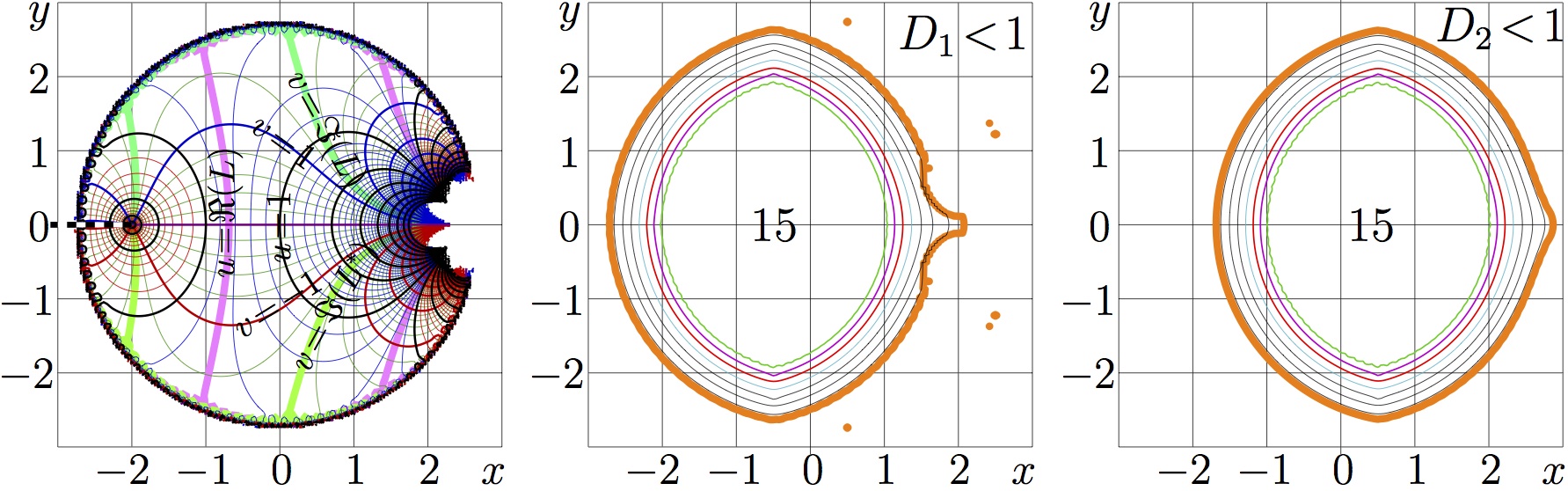 | 1,783 × 558 (342 KB) | Maintenance script (talk | contribs) | Importing image file |
You cannot overwrite this file.
File usage
There are no pages that use this file.
