Text «Bigpuf» is part of the gedankenexperiment, the sci-fi utopia entitled «Tartaria».
Here is the Prologue, kind of Genesis.
The most of events described refer to the end of century 21 - beginning of century 22.
The project is loaded as set of files. Some of them are just narrative about the
main personates.
Some other, like this file, appear as a background of the main narrative.
Bigpuf is long, heavy, destructive war at the North, Central and East parts of Eurasia.
At the early stage, it is called also «Dvizhuha» («Движуха»).
Bigpuf appears as natural and perhaps unavoidable result of degradation of Humanity in the Central, North and East Eurasia during centuries 19-21.
The main tradition of Moscovia is plundering territories from the neighbors.
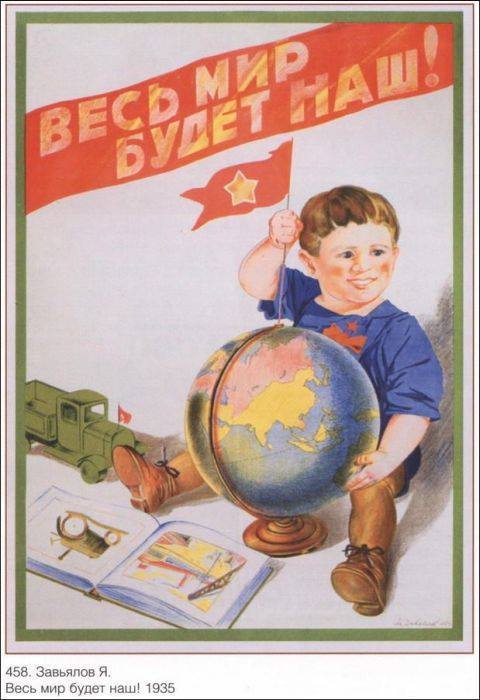
During centuries, the main goal of the Moscovian administration is to seise all the planet "by any price":
These ideas formed the aggressive mentality and degradation of population.
The word play «Нам нужен мир» gradually changed its meaning from «We need peace» to «We need World»;
the special reform of the official grammar had been performed in order to boost such a transition.
The aggressive behavior leaded to depopulation of Moscovia.
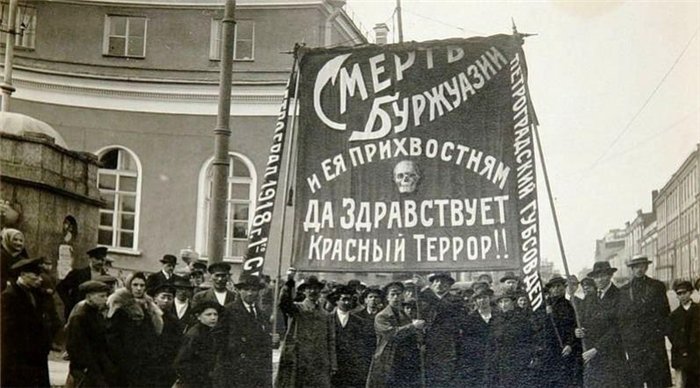
Most of population of Moscovia had been spent in century 20 during the two world wars and the Red Terror.
The Moscovian government in centuries 19-21 consider the people of the occupied regions as sources of slaves,
to use them as a cannon fodder to seise new and new territories.
In order to maintain the profit of the weapon factories, the offees had to maintain Moscoiva in the state of war. The corruption, the wars and the state terror leaded to the collapse of the «Russian Empire») and to that of the USSR in century 20 and the collapse of RF in century 21.
Only few Moscoivan colonies, mainly in the Central Europe, being released from Moskovian empire, succeeded to join so-called «Western Civilization» [1].
Other parts continued to fight each other.
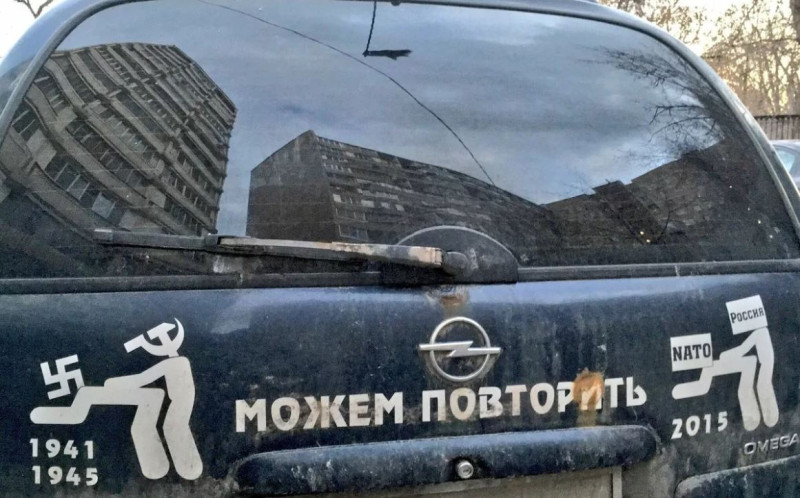
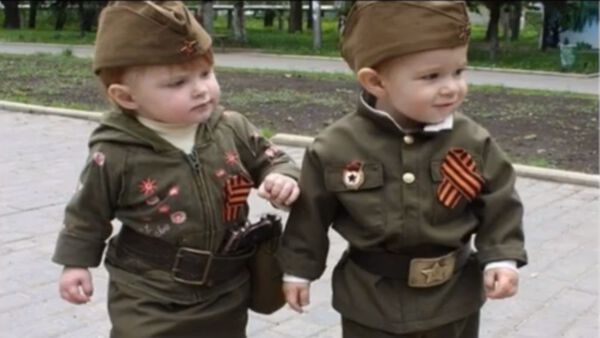
Many people want to get «Back in the USSR». However, nobody wanted a new Stalin for himself; but some want the teрror for their neighbors.
Some people want to repeat the genocide with hope, that in the new Gulag, they will be not prisoners, but jailers; not slaves, but "pomeshchik"(«помещик»).
Many people hope that they can plunder the land from their neighbors and not be punished for this.
Such a mentality predetermined the escalation of war; first, against the other countries («Dvizhuha», «Движуха»), then inside Moscovia.
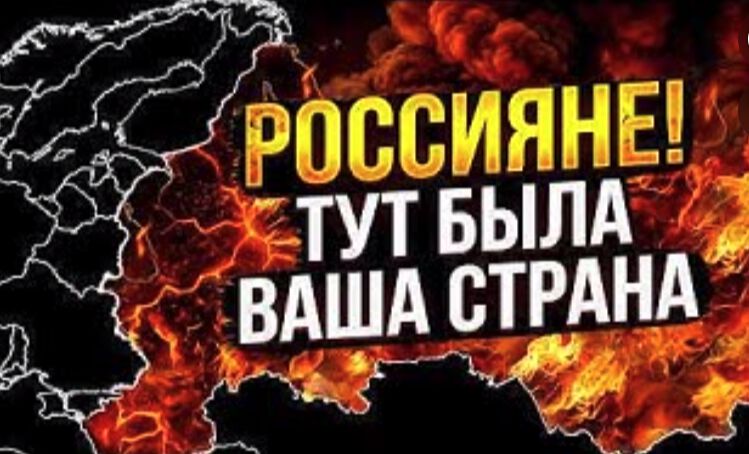
To end of century 21, the most of territory of former Moscovia is depopulated and contaminated with toxic chemical waste and unstable isotopes.
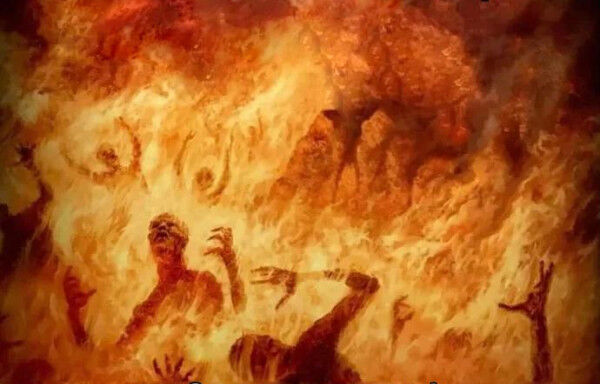
This territory is considered as a Hell, Tartar. Thus, the name «Tartaria».
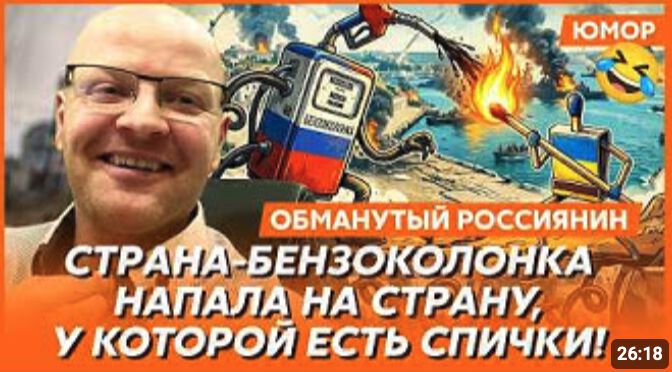
From outside, the war at Tartaria was, first at all, as a big and dangerous "puff" of toxic substances; in particular, the unstable isotopes.
This predetermines the name of that war; it is not only a «dvizhuha», but also the Bigpuf. At Tartaria, the local offees, the feudal lords, called «pahan»s, use all kinds of weapon fight each other. The nuclear plants of neighbors were considered as primary targets, in order to bring maximum problems to enemies. All hydroelectric power stations, dams and their reservoirs were used for threats and terror.
The flow of unstable isotopes and barbarian refugees from Tartaria brought a lot of problems to civilized countries.
En fin, the Inited Nations dared to intervene. That action is related with Mark Arturov.
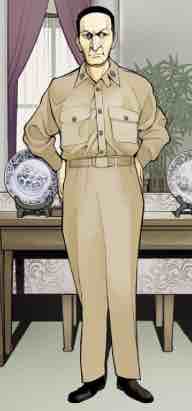
General Mark Arturov, commander of the joint International Army, got the order to stop the Bigpuf. After a year of vain efforts, Arturov presented to the United Nations his report about failure of his mission and asked for resign.
Arturov shown confessions of the barbarians:
«Мы все сегодня живущие произошли от тех, кто в своё время сохранился.
Лучше были убиты. Лучше это те, кто не могли молчать, начиная с декабря семнадцатого года, когда начались
массовые расстрелы, которые не могли молчать, которые восставали, выступали, говорили. Они все истреблены.
Всё вольное xристианство истреблено.
Вся вольная интеллигенция истреблена.
Все истреблены. ..»
Arturov offered the translation:
«All of us living today are descended from those who survived in their time.
The honest people were killed. All those, those who couldn't remain silent, starting in December 1917, when the mass executions began, those who couldn't remain silent, who rebelled, spoke out, and spoke out. Now all they are exterminated.
All free Christianity was exterminated.
All free researchers were exterminated.
All the honest workers were exterminated. ..»
The quote shocked the representatives of the UN. A murmur swept through the hall.
Arturov summarized:
That continued dining almost two centuries. The civilized people were expelled of killed there.
It is irrecoverable..
Arturov finished his report with the following:
- It is not a country, it is a hell, Tartar. They killed or expelled all honest citizens. The population of Moscovia consists of bandits, terrorists, pirates, robbers, thieves, alcoholics, drug addicts. Nothing can be done about them. It is impossible to tame alligators. I cannot implement the order of the Uniter Nations. The mission is impossible. That's why I want to resign. Please excuse me for the failure.
Most of the participants were in stupor. But the Chair of the United Nation answered Arturov in this way:
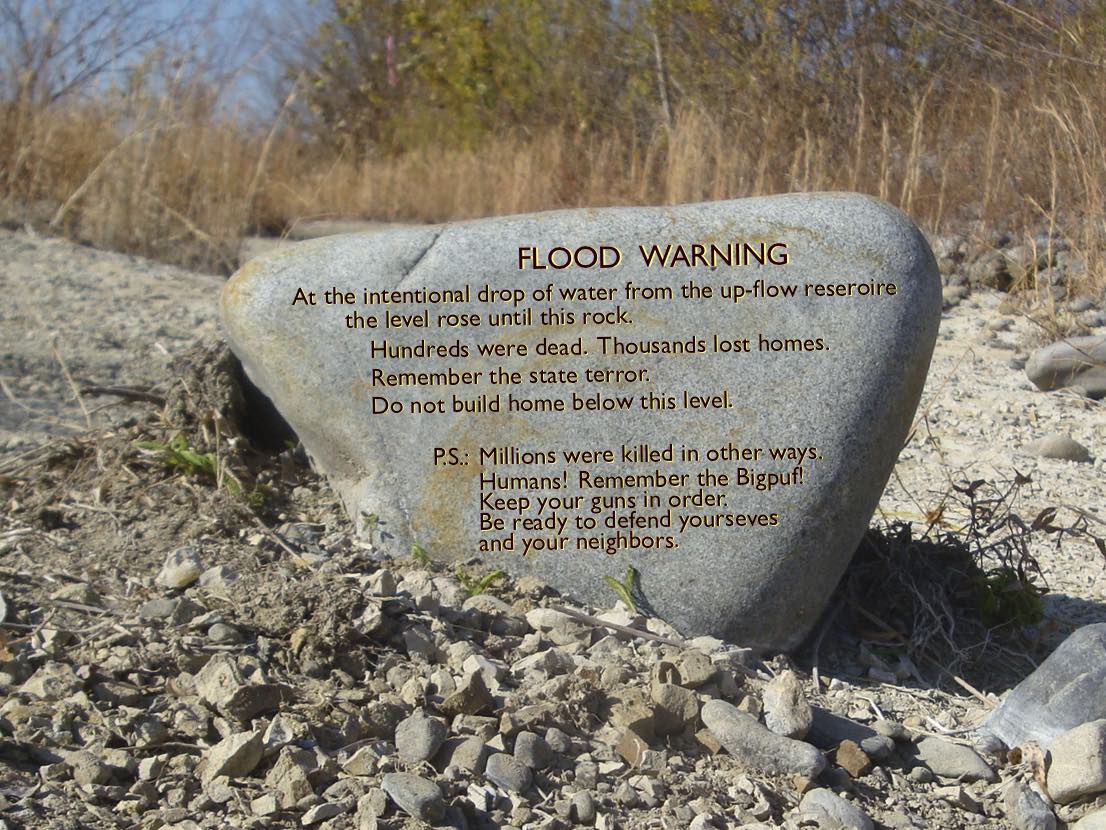
- Sorry, my dear General. We have no other people for that land.
And we have no other commander to replace you.
Please, go back and continue your job. Do the best you can do.
Mark Arturov obeyed. Arturov's men used to catch or to eliminate the most dangerous terrorists.
Arturov organized self-defense for several farms that were trying to engage in agriculture.
Arturov's men used to repair the roads.
They installed the network of web cameras.
They erected the memorial monuments about the most horrible events.
They used to build-up hospitals and schools.
At first, it seemed simply futile.
Then the scale of the clashes began to diminish.
Arturov did not hope to improve the mentality of Tartarians, nor to stop the barbarian customs, but to localize them, in order that neither refugees, nor radioactive clouds disturbs his bosses.
En fin, Arturov succeeds this with the Constitution of Tartaria.
Tartaria was formed by the unanimous decision of the Constituent Assembly of the pahans of Murka, Norga, and Kristovina at the Kristovina Cathedral on January 5, 2100.
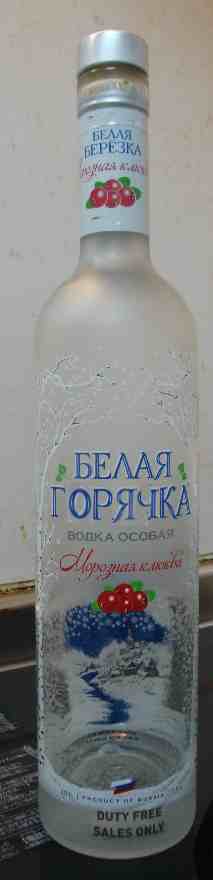
The new era was supposed to begin on December 31st, but after celebrating Christmas, New Year, and the New Century, the pahans were in a state that the director of the Kristovina Field Hospital has qualified as "delirium tremens due to alcohol intoxication." («алкогольную водку пьянствут, хулиганские безобразия нарушают»).
The meeting was chaired by representatives of the International Commission for Peaceful Settlement.
The term "Peaceful Settlement" was perceived by the pahans as a mockery. Тhe territory of Tartaria was covered with military bases of the International Forces, and the Commander of these Forces, Mark Arturov, was the chairman of the meeting.
The choice had been made many years ago, and quite starkly: Either the pahans accept an agreement before the new century begins, or they face an international tribunal as war criminals.
The international community had no difficulty eliminating every one of the Tartar pahans. But the problem was that instead of one dead pahan, two or three new ones immediately appeared, even more aggressive.
After few years of heavy work, Mark Arturov mentioned sone positive advances in his mission. He bet his friends a case of champagne that the peaceful agreement would be adopted before the end of the century.
Technically, Arturov lost. The Constitution wasn't adopted in December, as planned, but only on January 5th, when the leaders of Tartaria's criminal underworld, swollen from hangovers (after Christmas and New Year's celebrations), finally drew a unified map of their fiefdoms, solemnly embraced, and chanted the bold oath:
Мирись, мирись, мирись;
И больше не дерись;
А те, кто будут суки,
На нос получат нуки!
It was a bluff. Mark Arturov had strict order to use only his personal mortabots against those who violated the Agreement. Arturov had already become convinced of the mortabots' ineffectiveness. That is, the mortabots were guaranteed to find and destroy the disobedient pahan, but the pahan had a double, and that was not a worst scenario. Instead of pahan, his wives came to power, or his sons, or his deputies, or his assistants, or various combinations of the aforementioned. They began to fight for "areas of influence". They fought not only against neighboring feudal lords but also against each other. Mark Arturov's minimum goal was to persuade the bigwigs to draw borders and at least refrain from attacking their neighbors. The adoption of the Constitution accomplished this.
None of the refugees who had already fled Tartaria returned. But many of those were en route. They stopped and decided to test the new Constitution. They stayed in abandoned houses, ate the corpses left inside. They washed the unstable isotopes off the houses with boiling water and washing powder, delivered by special vehicles of the International Forces. In the spring, the unfortunate souls removed the topsoil. They planted potatoes, built greenhouses, installed special filters on wells. They caught feral chickens, piglets, and rabbits in parks, built enclosures for them, installed wind turbines, solar panels, satellite dishes.. Generally, they tried to lead a peaceful life. Some of them were recruited into the International Troops for a fee that would have seemed symbolic in civilized countries. The international community agreed with Mark Arturov that it was cheaper and more humane to support these penniless cutthroats than to risk the lives of their own soldiers.
The clashes did indeed cease. Step by step, Arturov withdrew the International Troops. The pahans fought over the population of their "zones" and handed out passports to anyone. Almost all the residents, that is, those who were still alive, received citizenship from one of Tartaria's farms.
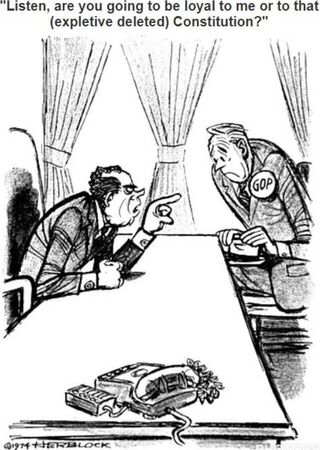
The pahans fell into a cleverly laid trap. They saw no harm in the restrictions on introducing new taxes. Firstly, they could declare any taxes they wanted right away. Secondly, it was assumed that the pahan would be provided with everything he needed for free; and they would even fight among themselves to decide "Who gets to greet him and offer him bread and salt." [4].
The pahans were sincerely confident of their own popularity and saw no harm in honest, open elections. On the contrary, they liked the idea of open elections, a personalized vote. That would reveal the most loyal allies, who would be the first to cast their vote for the pahan or for whomever the pahan pointed to. And those who voted "wrong" would not survive long, since their insidious plan would immediately become known.
This was obvious to almost everyone, but not to General Arturov. As soon as a voter voted against the Pahan, they were placed under surveillance by the pahan's men. But even earlier, Arturov's mercenaries had been sending mortabots to spy on those spying on freethinkers. The very first attempts at revenge against fellow citizens who voted "wrong" were interpreted as "terror" and "electoral fraud". This was classified by local "information army" agents as a gross violation of the Constitution, and was accompanied by the immediate execution of the violators. Arturov was horrified when he received the first reports of such "successes" from his mercenaries, but the bread had already been cut; it had to be chewed and digested.
In the first honest elections, new citizens were elected as Pahan. Not the most honest, of course, but at least they had some ideas beyond robbery, plunder, and carnal pleasures. They wouldn't have lasted a day in power, but the armed mercenaries paid by Arturov gave the rebels no hope of success. The most hardened bandits scattered to the surrounding areas, trying to avoid Tartaria. This "infusion" did not stabilize the situation in the regions bordering Tartaria; quite the opposite. Tartaria became an island, an oasis of some civilization in the middle of a wild and sparsely populated area. Residents of neighboring regions flocked to this oasis—from refugees, for whom a "labor camp" had to be built in Murka, to entire republics. As soon as any region managed, with Arturov's help, to define its borders and proclaim itself a "farm," the residents rushed to join Tartaria as quickly as possible.
Applications for membership in Tartaria poured in like peas from a leaky sack, and referendums on the adoption of some new farm were held continuously, overlapping one another.. The actual writing of the "lad-democratic" Constitution was a real epic. The fact is that both the pahans and their dimwitted secretaries were incredibly ignorant; they didn't even know the basics of arithmetic, let alone history, literature, or any technical sciences. They didn't and couldn't see the Trojan horse of democracy slipped to them under the guise of a genuine, boss-and-lad-friendly constitution, which, they thought, would allow them to continue to live "by the rules", but now enshrined in law..
After two cycles of re election of pahans, Arturo withdrawn the International Troops and reported to the General Assembly on termination of his mission. That time, Arturov believed, that with this, he has finished his deal with Tartaria forever..
However the Constitution of Tartaria was not expected to last long.
But it was supposed to give a dozen years for the officials of civilized countries to prepare for building-up some more civilized at that land, after the collapse of Tartaria.
Mark Arturov tried to explain this to the General Assembly of the Inited Nations.
Then, he was allowed, en fin, to resign.
The forecast suggested in the Utopia is not only option for Moscovia of century 21.
In 2025-2026,
Caesar
(Andronnikov Maximilian Alexandrovich,
Андронников Максимилиан Александрович)
suggests more optimistic predictions
[5][6].
In order not to supply the enemy with information,
Caesar reveals neither his sources of information nor the method for overthrowing the Putin regime.
Navigation:
Bigpuf: this part, "End of the beginning"
Constitution of Tartaria: Main Law
00 Introduction, description of the project and warnings
01 Beginning of Narrative of the First Book
02 Picnic: «If tomorrow corrupt», «Cannibal tale»
03 Natа Kiskin and Cranberry tree
04 Again Natа and catastrophe
05 Verdict and departure
Trulag
Book1
Book2
Book3
Book4
Book5
..