File:Ackerplot.jpg



Original file (2,800 × 4,477 pixels, file size: 726 KB, MIME type: image/jpeg)
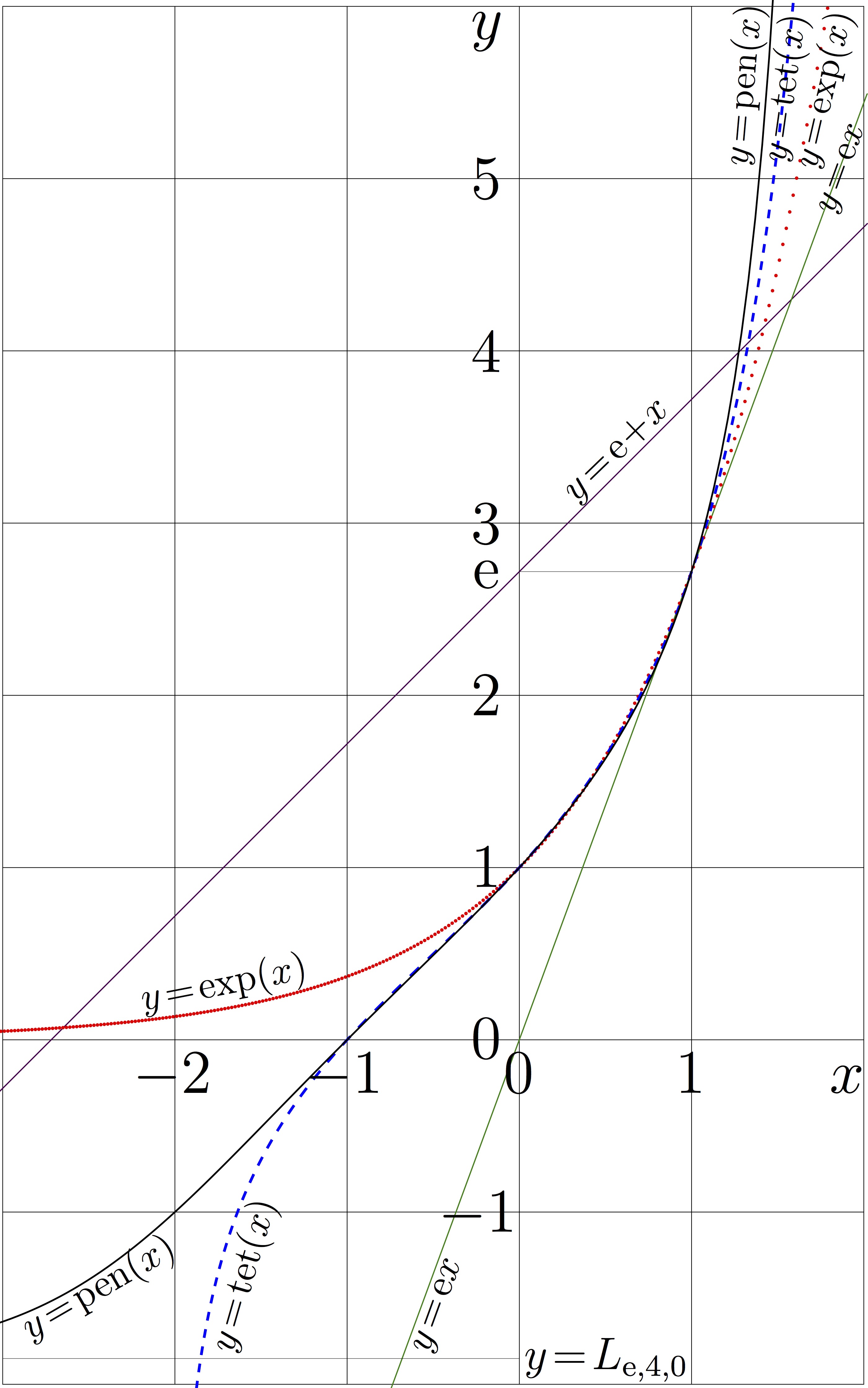
Figure 19.7 from page 266 of book «Superfunctions»[1].
Explicit plot of the 5 Ackermann functions to base \(\mathrm e\)
\(y=A_{\mathrm e,n}(x)~\) for \(n=1,2,3,4,5\)
\(A_{\mathrm e,1}(z)=\mathrm e + z\)
\(A_{\mathrm e,2}(z)=\mathrm e \,z\)
\(A_{\mathrm e,3}(z)=\mathrm e^z~\) , see «Exponential»
\(A_{\mathrm e,4}(z)=\mathrm{tet}(z)~\) , see «Natural tetration»
\(A_{\mathrm e,5}(z)=\mathrm{pen}(z)~\) , see «Natural pentation»
General properties of Ackermann functions
The Ackermann function, or ackermann, to base \(b\) satisfies the transfer equation
\(A_{b,n}(z\!+\!1)=A_{b,n-1}\big( A_{b,n}(z) \big)\)
and the "initial" conditions \(~A_{b,1}(z)\!=\!b\!+\!z~\), \(~~A_{b,n}(1)\!=\!b\) for \(n\!>\!1\)
These conditions are not sufficient to provide the uniqueness of the ackermanns. The holomorphism with respect to the argument should be also required.
\(n\) is interpreted as number of the ackermann; is supposed to be natural number.
For real base \(b\), the ackermann is real-holomorphic, \(A_{b,n}(z^*)=A_{b,n}(z)^*\).
In principle, here \(b\) can be also a complex number. To year 2025, the generalization to complex values of \(n\) is not found.
C++ generator of curves
/* Files fsexp.cin and fslog.cin should be loaded in order to compile the code below. */
 #include <math.h>
 #include <stdio.h>
 #include <stdlib.h>
 #define DB double
 #define DO(x,y) for(x=0;x<y;x++)
#include <complex>
typedef std::complex<double> z_type;
 #define Re(x) x.real()
 #define Im(x) x.imag()
 #define I z_type(0.,1.)
// #include "ado.cin"
void ado(FILE *O, int X, int Y)
{       fprintf(O,"%c!PS-Adobe-2.0 EPSF-2.0\n",'%');
        fprintf(O,"%c%cBoundingBox: 0 0 %d %d\n",'%','%',X,Y);
        fprintf(O,"/M {moveto} bind def\n");
        fprintf(O,"/L {lineto} bind def\n");
        fprintf(O,"/S {stroke} bind def\n");
        fprintf(O,"/s {show newpath} bind def\n");
        fprintf(O,"/C {closepath} bind def\n");
        fprintf(O,"/F {fill} bind def\n");
        fprintf(O,"/o {.01 0 360 arc C F} bind def\n");
        fprintf(O,"/times-Roman findfont 20 scalefont setfont\n");
        fprintf(O,"/W {setlinewidth} bind def\n");
        fprintf(O,"/RGB {setrgbcolor} bind def\n");}
/* end of routine */

 #include "fsexp.cin"
 #include "fslog.cin"

z_type pen0(z_type z){ DB Lp=-1.8503545290271812;  DB k,a,b;
        k=1.86573322821; a=-.6263241; b=0.4827;
        z_type e=exp(k*z); return Lp + e*(1.+e*(a+b*e)); }

z_type pen7(z_type z){ DB x; int m,n; z=pen0(z+(2.24817451898-7.));
DO(n,7) { if(Re(z)>8.) return 999.;  z=FSEXP(z);  if(abs(z)<40) goto L1; return 999.; L1: ;}
return z; }

z_type pen(z_type z){ DB x; int m,n;
x=Re(z); if(x<= -4.) return pen0(z);
m=int(x+5.);
z-=DB(m);
z=pen0(z);
DO(n,m) z=FSEXP(z);
return z;
}

int  main(){ int j,k,m,n; DB x,y, p,q, t; z_type z,c,d, cu,cd;
FILE *o;o=fopen("ackerplo.eps","w");  ado(o,508,808);
 fprintf(o,"304 204 translate\n 100 100 scale\n");
#define M(x,y) fprintf(o,"%8.4f %8.4f M\n",0.+x,0.+y);
#define L(x,y) fprintf(o,"%8.4f %8.4f L\n",0.+x,0.+y);
#define o(x,y) fprintf(o,"%8.4f %8.4f o\n",0.+x,0.+y);
 for(m=-3;m<3;m++) {M(m,-2)L(m,6)}
 for(n=-2;n<9;n++) {M(  -3,n)L(2,n)} fprintf(o,"2 setlinecap 1 setlinejoin .004 W 0 0 0 RGB S\n");

M(-3.02,-3.02+M_E)L(2.02,2.02+M_E) fprintf(o,".007 W .3 0 .3 RGB S\n");
M(-1., -M_E)L(2.02,2.02*M_E) fprintf(o,".007 W 0 .5 0 RGB S\n");

//DO(n,156){x=-4+.04*n;y=exp(x); if(n==0) M(x,y)else L(x,y); if(y>7.)break;} fprintf(o,".02 W 0 .8 0 RGB S\n");
fprintf(o,"1 0 0 RGB\n");
DO(n,306){x=-3.02+.02*(n-.5);y=exp(x); o(x,y); if(y>7.)break;} fprintf(o,".02 W 0 .8 0 RGB S\n");

//DO(n,150){x=-1.9+.04*n;y=Re(FSEXP(x)); if(n==0) M(x,y)else L(x,y); if(y>8.)break;} fprintf(o,".02 W 0 0 1 RGB S\n");
DO(n,202){y=-3+.05*(n-.6);x=Re(FSLOG(y));
if(n/2*2==n) M(x,y)else L(x,y); if(y>8.)break;} fprintf(o,"0 setlinecap .016 W 0 0 1 RGB S\n");

DO(n,150){x=-3.03+.04*n;y=Re(pen7(x)); if(n==0) M(x,y)else L(x,y); if(y>7.)break;} fprintf(o,".01 W 0 0 0 RGB S\n");

DB L=-1.8503545290271812;
DB K=1.86573322821;
DB a=-.6263241;
DB b=0.4827;
M(-3,L)L(0,L)
M(0,M_E) L(1,M_E) fprintf(o,".002 W 0 0 0 RGB S\n");
//M(-4.1,-4.1+M_E) L(4.1,4.1+M_E) fprintf(o,".002 W 0 0 0 RGB S\n");
DB t2=M_PI/1.86573322821;
DB tx=-2.32;
fprintf(o,"showpage\n%c%cTrailer",'%','%'); fclose(o);
printf("pen7(-1)=%18.14f\n", Re(pen7(-1.)));
printf("Pi/1.86573322821=%18.14f  %18.14f\n", M_PI/1.86573322821, 2*M_PI/1.86573322821);
        system("epstopdf ackerplo.eps");
        system(    "open ackerplo.pdf");
}
Latex generator of curves
\documentclass[12pt]{article}
\paperwidth 504px
\paperheight 806px
\textwidth 1394px
\textheight 1300px
\topmargin -104px
\oddsidemargin -92px
\usepackage{graphics}
\usepackage{rotating}
\newcommand \sx {\scalebox}
\newcommand \rot {\begin{rotate}}
\newcommand \ero {\end{rotate}}
\newcommand \ing {\includegraphics}
\newcommand \rmi {\mathrm{i}}
\begin{document}
{\begin{picture}(608,806) %\put(12,0){\ing{penma}}
\put(0,0){\ing{ackerplo}}
\put(277,788){\sx{3.}{$y$}}
\put(277,695){\sx{3.}{$5$}}
\put(277,594){\sx{3.}{$4$}}
\put(277,494){\sx{3.}{$3$}}
\put(278,468){\sx{3.}{$\mathrm e$}}
\put(277,394){\sx{3.}{$2$}}
\put(277,294){\sx{3.}{$1$}}
\put(277,194){\sx{3.}{$0$}}
\put(258, 93){\sx{3.}{$-1$}}
\put( 80,174){\sx{3.}{$-2$}}
\put(180,174){\sx{3.}{$-1$}}
\put(296,174){\sx{3.}{$0$}}
\put(396,174){\sx{3.}{$1$}}
\put(486,174){\sx{3.}{$x$}}
\put(438,714){\sx{1.8}{\rot{85}$y\!=\!\mathrm{pen}(x)$\ero}}
\put(460,716){\sx{1.8}{\rot{82}$y\!=\!\mathrm{tet}(x)$\ero}}
\put(478,712){\sx{1.8}{\rot{77}$y\!=\!\mathrm{exp}(x)$\ero}}
\put(488,686){\sx{1.8}{\rot{70}$y\!=\!\mathrm{e}x$\ero}}
%\put(478,628){\sx{1.8}{\rot{50}$y\!=\!\mathrm{e}\!+\!x$\ero}}
\put(338,518){\sx{1.9}{\rot{44}$y\!=\!\mathrm{e}\!+\!x$\ero}}
%
\put(86,222){\sx{1.9}{\rot{11}$y\!=\!\mathrm{exp}(x)$\ero}}
\put(20,30){\sx{1.9}{\rot{30}$y\!=\!\mathrm{pen}(x)$\ero}}
\put(138,22){\sx{1.9}{\rot{74}$y\!=\!\mathrm{tet}(x)$\ero}}
\put(252,22){\sx{1.9}{\rot{70}$y\!=\!\mathrm{e} x$\ero}}
%
\put(308, 13){\sx{2.2}{$y\!=\!L_{\mathrm e,4,0}$}}
\end{picture}
\end{document}
References
http://www.ams.org/mcom/2009-78-267/S0025-5718-09-02188-7/home.html https://mizugadro.mydns.jp/PAPERS/2009analuxpRepri.pdf D.Kouznetsov. Analytic solution of F(z+1)=exp(F(z)) in complex z-plane. Mathematics of Computation, v.78 (2009), 1647-1670.
https://mizugadro.mydns.jp/PAPERS/2010vladie.pdf D.Kouznetsov. Superexponential as special function. Vladikavkaz Mathematical Journal, 2010, v.12, issue 2, p.31-45.
http://www.springerlink.com/content/u7327836m2850246/ H.Trappmann, D.Kouznetsov. Uniqueness of Analytic Abel Functions in Absence of a Real Fixed Point. Aequationes Mathematicae, v.81, p.65-76 (2011)
Keywords
«[[]]», «Ackermann function», «Addition», «Exponential», «Multiplication», «Pentation», «Tetration», «Superfunction», «Superfunctions»,
File history
Click on a date/time to view the file as it appeared at that time.
| Date/Time | Thumbnail | Dimensions | User | Comment | |
|---|---|---|---|---|---|
| current | 06:10, 1 December 2018 | | 2,800 × 4,477 (726 KB) | Maintenance script (talk | contribs) | Importing image file |
You cannot overwrite this file.
File usage
The following page uses this file:
