Difference between revisions of "File:Sinplo2t100.jpg"
($ -> \( ; pre; ref; Keywords) |
($ -> \( ; refs ; pre ; keywords) |
||
| Line 1: | Line 1: | ||
| − | {{oq| |
+ | {{oq|Boyt100.jpg|Original file (3,473 × 1,646 pixels, file size: 467 KB, MIME type: image/jpeg)}} |
| − | + | Figure 12.7 from page 158 of book [[Superfunctions]]<ref> |
|
| − | <ref> |
||
https://www.amazon.co.jp/-/en/Dmitrii-Kouznetsov/dp/6202672862 <br> |
https://www.amazon.co.jp/-/en/Dmitrii-Kouznetsov/dp/6202672862 <br> |
||
https://www.morebooks.de/shop-ui/shop/product/978-620-2-67286-3 <br> |
https://www.morebooks.de/shop-ui/shop/product/978-620-2-67286-3 <br> |
||
https://mizugadro.mydns.jp/BOOK/468.pdf <br> |
https://mizugadro.mydns.jp/BOOK/468.pdf <br> |
||
D.Kouznetov. [[Superfunctions]]. [[Lambert Academic Publishing]], 2020. |
D.Kouznetov. [[Superfunctions]]. [[Lambert Academic Publishing]], 2020. |
||
| + | </ref>: |
||
| + | |||
| + | Approximation of the shape of the sledge runner by |
||
| + | <ref> |
||
| + | http://en.wikipedia.org/wiki/File:Boy_on_snow_sled,_1945.jpg Father of JGKlein. Boy on snow sled, 1945. |
||
</ref> |
</ref> |
||
| + | with the hundredth iteration of [[sin]] |
||
| + | <ref>http://mizugadro.mydns.jp/PAPERS/2014susin.pdf Dmitrii Kouznetsov. Super sin. December 17, 2013. Iterates of function sin are considered. The superfunction SuSin is constructed as holomorphic solution of the transfer equation sin(SuSin(z))=SuSin(z+1). The Abel function AuSin is constructed as solution of the Abel equation AuSin(sin(z))=AuSin(z)+1; in wide range of values z, the rela- tion SuSin(AuSin(z))=z holds. Iteration of sin is expressed with sinˆn(z)=SuSin(n+AuSin(z)), where the number n of iteration has no need to be integer. .. |
||
| + | </ref>; |
||
| + | \( |
||
| − | [[Iterate]]s of function [[sin]] of real argument, [[explicit plot]] |
||
| + | y=\sin^n(\pi/2)-\sin^n(x)\) |
||
| + | with single adjusting parameter \(n\!=\!100\). |
||
| − | \(y=\sin^n(x)=\mathrm{SuSin}\big(n+\mathrm{AuSin}(x)\big)\) |
||
| + | Super sin and the Abel sin functions, id est, [[SuSin]] and [[AuSin]], can be used to evaluate the iteration of [[sin]]; |
||
| + | then, the number \(n\) of iterate has no need to be integer. |
||
| + | This is improved version of image http://mizugadro.mydns.jp/t/index.php/File:Boyt.jpg |
||
| − | for various real values of number \(n\) of iterate. |
||
| + | the resolution of the image of the sledge is better, and the file is half shorter. |
||
| + | ==C++ generator of curve== |
||
| − | For the evaluation at non-integer \(n\), the representation through the superfunction [[SuSin]] and the Abel function [[AuSin]] are used. |
||
| + | // Files [[ado.cin]], [[arcsin.cin]], [[susin.cin]], [[ausin.cin]], should be loaded in order to compile the code below. |
||
| − | |||
| + | //<pre> |
||
| − | Example: |
||
| − | |||
| − | \(\sin^{1/2}(\pi/2)\approx 1.140179476170028\) |
||
| − | |||
| − | \(\sin^{1/2}(1.140179476170028) \approx 1.000000000000003\approx 1\) |
||
| − | |||
| − | This figure is almost the same as |
||
| − | http://mizugadro.mydns.jp/t/index.php/File:Sinplo1t100.jpg |
||
| − | , but the thin curves are made a little bit thicker, |
||
| − | to make them seen at the poor resolution of the screen. |
||
| − | |||
| − | ==[[C++]] generator of curves== |
||
| − | /* Files |
||
| − | [[ado.cin]], |
||
| − | [[arcsin.cin]], |
||
| − | [[susin.cin]], |
||
| − | [[ausin.cin]] |
||
| − | should be loaded in order to compile the code below.*/ |
||
| − | <pre> |
||
#include <math.h> |
#include <math.h> |
||
#include <stdio.h> |
#include <stdio.h> |
||
| Line 52: | Line 45: | ||
#include "susin.cin" |
#include "susin.cin" |
||
#include "ausin.cin" |
#include "ausin.cin" |
||
| + | |||
| + | DB sinni(int n, DB x){ DB s=x; int m; DO(m,n)s=sin(s); return s;} |
||
| + | |||
| + | z_type sinn(z_type n, z_type z){return susin(n+ausin(z));} |
||
| + | |||
int main(){ int j,k,m,n; DB x,y, p,q, t; z_type z,c,d; |
int main(){ int j,k,m,n; DB x,y, p,q, t; z_type z,c,d; |
||
| − | FILE *o;o=fopen(" |
+ | FILE *o;o=fopen("boy.eps","w"); ado(o,318,30); |
#define M(x,y) {fprintf(o,"%6.4f %6.4f M\n",0.+x,0.+y);} |
#define M(x,y) {fprintf(o,"%6.4f %6.4f M\n",0.+x,0.+y);} |
||
#define L(x,y) {fprintf(o,"%6.4f %6.4f L\n",0.+x,0.+y);} |
#define L(x,y) {fprintf(o,"%6.4f %6.4f L\n",0.+x,0.+y);} |
||
| Line 60: | Line 58: | ||
fprintf(o,"1 1 translate\n 100 100 scale\n"); |
fprintf(o,"1 1 translate\n 100 100 scale\n"); |
||
fprintf(o,"1 setlinejoin 2 setlinecap\n"); |
fprintf(o,"1 setlinejoin 2 setlinecap\n"); |
||
| − | for(m=0;m<4;m++){M(m,0) L(m, |
+ | for(m=0;m<4;m++){M(m,0) L(m,.2) } |
| − | for(n=0;n< |
+ | for(n=0;n<3;n++){M( 0,.1*n) L(M_PI,.1*n)} |
fprintf(o,".004 W 0 0 0 RGB S\n"); |
fprintf(o,".004 W 0 0 0 RGB S\n"); |
||
| − | M(M_PI/2.,0); L(M_PI/2., |
+ | M(M_PI/2.,0); L(M_PI/2.,.2) |
| − | M(M_PI,0); L(M_PI, |
+ | M(M_PI,0); L(M_PI,.2) |
| + | fprintf(o,".003 W 0 0 0 RGB S\n"); |
||
| − | M(0,M_PI/2.); L(M_PI,M_PI/2) |
||
| − | fprintf(o,".001 W 0 0 0 RGB S\n"); |
||
| − | M(0,0) L(M_PI/2.,M_PI/2.) |
||
| − | fprintf(o,".007 W 0 1 1 RGB S\n"); |
||
| − | M(0,0) L(M_PI/2., M_PI/2.) L(M_PI,0) |
||
| − | fprintf(o,".001 W 0 0 0 RGB S\n"); |
||
| + | n=100; |
||
| − | fprintf(o,"1 setlinejoin 1 setlinecap\n"); |
||
| + | p=sinni(100,M_PI/2); |
||
| + | M(0,p) DO(m,315){x=.01*(m+.1);y=sin(x); y=p-sinni(100,x); L(x,y); } fprintf(o,".01 W 0 1 0 RGB S\n"); |
||
| − | |||
| − | M(0,0) DO(m,158){x=.01*(m+.1);y=sin(x); L(y,x); } fprintf(o,".009 W 0 1 1 RGB S\n"); |
||
| − | M(0,0) DO(m,158){x=.01*(m+.1);y=sin(sin(x)); L(y,x); } fprintf(o,".009 W 0 1 1 RGB S\n"); |
||
| − | M(0,0) DO(m,158){x=.01*(m+.1);y=sin(sin(sin(x))); L(y,x); } fprintf(o,".006 W 0 0 1 RGB S\n"); |
||
| − | M(0,0) DO(m,158){x=.01*(m+.1);y=sin(sin(sin(sin(x)))); L(y,x); } fprintf(o,".006 W 0 0 1 RGB S\n"); |
||
| − | M(0,0) DO(m,158){x=.01*(m+.1);y=sin(sin(sin(sin(sin(x)))));L(y,x); } fprintf(o,".006 W 0 0 1 RGB S\n"); |
||
| − | M(0,0) DO(m,158){x=.01*(m+.1);y=sin(x); DO(n, 10)y=sin(y); L(y,x); } fprintf(o,".006 W 0 0 1 RGB S\n"); |
||
| − | M(0,0) DO(m,158){x=.01*(m+.1);y=sin(x); DO(n, 20)y=sin(y); L(y,x); } fprintf(o,".006 W 0 0 1 RGB S\n"); |
||
| − | M(0,0) DO(m,158){x=.01*(m+.1);y=sin(x); DO(n,100)y=sin(y); L(y,x); } fprintf(o,".006 W 0 0 1 RGB S\n"); |
||
| − | |||
| − | M(0,0) DO(m,315){x=.01*(m+.1);y=sin(x); L(x,y); } fprintf(o,".009 W 0 1 1 RGB S\n"); |
||
| − | M(0,0) DO(m,315){x=.01*(m+.1);y=sin(sin(x)); L(x,y); } fprintf(o,".009 W 0 1 1 RGB S\n"); |
||
| − | M(0,0) DO(m,315){x=.01*(m+.1);y=sin(sin(sin(x))); L(x,y); } fprintf(o,".006 W 0 0 1 RGB S\n"); |
||
| − | M(0,0) DO(m,315){x=.01*(m+.1);y=sin(sin(sin(sin(x)))); L(x,y); } fprintf(o,".006 W 0 0 1 RGB S\n"); |
||
| − | M(0,0) DO(m,315){x=.01*(m+.1);y=sin(sin(sin(sin(sin(x)))));L(x,y); } fprintf(o,".006 W 0 0 1 RGB S\n"); |
||
| − | M(0,0) DO(m,315){x=.01*(m+.1);y=sin(x); DO(n, 10)y=sin(y); L(x,y); } fprintf(o,".006 W 0 0 1 RGB S\n"); |
||
| − | M(0,0) DO(m,315){x=.01*(m+.1);y=sin(x); DO(n, 20)y=sin(y); L(x,y); } fprintf(o,".006 W 0 0 1 RGB S\n"); |
||
| − | M(0,0) DO(m,315){x=.01*(m+.1);y=sin(x); DO(n,100)y=sin(y); L(x,y); } fprintf(o,".006 W 0 0 1 RGB S\n"); |
||
| − | |||
| − | for(n=1;n<21;n++){ |
||
| − | M(0,0) DO(m,158){ x=.01*(m+.1); z=x; c=ausin(z); c=susin(.1*n+c); y=Re(c); |
||
| − | if(abs(Im(c))>1.e-9) break; if(y>-1. && y<4.) L(y,x) else break; } |
||
| − | fprintf(o,".003 W 0 0 0 RGB S\n"); |
||
| − | } |
||
| − | |||
| − | for(n=1;n<21;n++){ |
||
| − | M(0,0) DO(m,315){ x=.01*(m+.1); z=x; c=ausin(z); c=susin(.1*n+c); y=Re(c); |
||
| − | if(abs(Im(c))>1.e-9) break; if(y>-1. && y<4.) L(x,y) else break; } |
||
| − | fprintf(o,".003 W 0 0 0 RGB S\n"); |
||
| − | } |
||
fprintf(o,"showpage\n"); |
fprintf(o,"showpage\n"); |
||
fprintf(o,"%c%cTrailer\n",'%','%'); |
fprintf(o,"%c%cTrailer\n",'%','%'); |
||
fclose(o); |
fclose(o); |
||
| − | system("epstopdf |
+ | system("epstopdf boy.eps"); |
| − | system( "open |
+ | system( "open boy.pdf"); //for macintosh |
getchar(); system("killall Preview"); // For macintosh |
getchar(); system("killall Preview"); // For macintosh |
||
} |
} |
||
| + | </pre> |
||
| + | |||
| + | ==Latex generator of labels== |
||
| + | File http://en.wikipedia.org/wiki/File:Boy_on_snow_sled,_1945.jpg should be loaded to the working directory in order to compile the [[Latex]] document below]] |
||
| − | </pre> |
||
| − | ==[[Latex]] generator of labels== |
||
<pre> |
<pre> |
||
\documentclass[12pt]{article} |
\documentclass[12pt]{article} |
||
| Line 120: | Line 87: | ||
\usepackage{graphics} |
\usepackage{graphics} |
||
\usepackage{rotating} |
\usepackage{rotating} |
||
| + | \usepackage{color} |
||
| − | \paperwidth 3230pt |
||
| + | %\paperwidth 3230pt |
||
| − | \paperheight 1700pt |
||
| + | %\paperheight 1700pt |
||
| + | \paperwidth 2510pt |
||
| + | \paperheight 1190pt |
||
\topmargin -100pt |
\topmargin -100pt |
||
| − | \oddsidemargin - |
+ | \oddsidemargin -92pt |
\textwidth 3200pt |
\textwidth 3200pt |
||
\textheight 1700pt |
\textheight 1700pt |
||
| Line 131: | Line 101: | ||
\pagestyle{empty} |
\pagestyle{empty} |
||
\begin{document} |
\begin{document} |
||
| + | \parindent 0pt |
||
| − | \sx{10}{\begin{picture}(328,168) |
||
| + | %\sx{10}{\begin{picture}(248,120) |
||
| − | \put(4,9){\includegraphics{sinplo2}} |
||
| + | \sx{10}{\begin{picture}(285,136) |
||
| − | \put(-1.6,162){\sx{1.}{$y$}} |
||
| − | \put( |
+ | %\put(4,9){\includegraphics{sinplo1}} |
| − | \put( |
+ | \put(0,15.9){\sx{1.76}{\rot{1}\includegraphics{Boy_on_snow_sled,_1945}\ero}} |
| + | %\put(-16,0){\rot{1}\sx{.14}{\includegraphics{boy05}}\ero} |
||
| + | %\put(0,0){\color{red} \rule{10pt}{100pt}} |
||
| + | %\put(0,0){\rot{1}\color{magenta} \rule{15pt}{132pt}\ero} |
||
| + | %\put(10,10){\rot{1}\color{yellow} \rule{215pt}{18pt}\ero} |
||
| + | %\put(210,0){\rot{1}\color{red} \rule{215pt}{138pt}\ero} |
||
| + | \put(.5,0){\rot{1}\color{white} \rule{5pt}{152pt}\ero} |
||
| + | \put(0,6){\rot{1}\color{white} \rule{225pt}{18pt}\ero} |
||
| + | \put(222,0){\rot{1}\color{white} \rule{215pt}{148pt}\ero} |
||
| + | %\put(14,9){\includegraphics{boy}} |
||
| + | \put(36,29){\includegraphics{boy}} % Curves by C++ |
||
| + | %\put(3,28){\sx{1.}{$y$}} |
||
| + | \put(25,48){\sx{1.}{$y$}} |
||
| + | \put(22,36){\sx{1.}{$0.1$}} |
||
| + | \put(22, 26){\sx{1.}{$0$}} |
||
%\put(-7, 06){\sx{1.2}{$-2$}} |
%\put(-7, 06){\sx{1.2}{$-2$}} |
||
| − | \put( |
+ | \put(35,20){\sx{1.}{$0$}} |
| − | \put( |
+ | \put(135,20){\sx{1.}{$1$}} |
| − | \put( |
+ | \put(185,19){\sx{1.}{$\pi/2$}} |
| − | \put( |
+ | \put(235,20){\sx{1.}{$2$}} |
| − | \put( |
+ | %\put(313,0){\sx{1.}{$3$}} |
| − | \put( |
+ | \put(246,20){\sx{1.}{$x$}} |
| − | \put(24.6,115){\sx{.8}{\rot{89}$n\!=\!-100$\ero}} |
||
| − | \put(42.6,115){\sx{.8}{\rot{89}$n\!=\!-20$\ero}} |
||
| − | \put(53,115){\sx{.8}{\rot{87}$n\!=\!-10$\ero}} |
||
| − | \put(67,115){\sx{.8}{\rot{85}$n\!= -5$\ero}} |
||
| − | %\put(70,115){\sx{.8}{\rot{82}$n\!=\!-4$\ero}} |
||
| − | \put(77,115){\sx{.8}{\rot{82}$n\!=\!-3$\ero}} |
||
| − | \put(84.3,115){\sx{.8}{\rot{79}$n\!=\!-2$\ero}} |
||
| − | \put(94,112){\sx{.8}{\rot{68}$n\!=\!-1$\ero}} |
||
| − | \put(123.4,134){\sx{.8}{\rot{63}$n\!=\! -0.2$\ero}} |
||
| − | \put(146,147){\sx{.9}{\rot{45}$n\!=\!0$\ero}} |
||
| − | \put(142,140){\sx{.8}{\rot{10}$n\!= 0.1$\ero}} |
||
| − | \put(140,131.6){\sx{.8}{\rot{10}$n\!= 0.2$\ero}} |
||
| − | \put(139,122){\sx{.8}{\rot{9}$n\!= 0.4$\ero}} |
||
| − | \put(110,95){\sx{.8}{\rot{21}$n\!= 1$\ero}} |
||
| − | \put(110,84.3){\sx{.8}{\rot{13}$n\!= 2$\ero}} |
||
| − | \put(110,77.3){\sx{.8}{\rot{8}$n\!= 3$\ero}} |
||
| − | %\put(110,72){\sx{.8}{\rot{6}$n\!= 4$\ero}} |
||
| − | \put(110,67){\sx{.8}{\rot{6}$n\!= 5$\ero}} |
||
| − | \put(110,53){\sx{.8}{$n\!=\! 10$}} |
||
| − | \put(110,42.3){\sx{.8}{$n\!= 20$}} |
||
| − | \put(110,24.3){\sx{.8}{$n\!=\!100$}} |
||
\end{picture}} |
\end{picture}} |
||
\end{document} |
\end{document} |
||
</pre> |
</pre> |
||
| + | ==References== |
||
| + | {{ref}} |
||
| + | |||
| + | {{fer}} |
||
| + | |||
==Keywords== |
==Keywords== |
||
| − | «[[ |
+ | «[[]]», |
| − | «[[ |
+ | «[[AuSin]]», |
| − | + | «[[Iterate]]», |
|
| − | + | «[[Sin]]», |
|
| − | <b>«[[SuSin]]»</b>, |
||
| − | «[[Superfunction]]», |
||
«[[Superfunctions]]», |
«[[Superfunctions]]», |
||
| + | «[[SuSun]]», |
||
| − | |||
| + | «[[Wikimedia]]», |
||
«[[Суперфункции]]», |
«[[Суперфункции]]», |
||
| − | ==References== |
||
| − | {{ref}} |
||
| − | {{fer}} |
||
| − | |||
| − | [[Category:Abel function]] |
||
| − | [[Category:Abelfunction]] |
||
| − | [[Category:AuSin]] |
||
[[Category:Book]] |
[[Category:Book]] |
||
[[Category:BookPlot]] |
[[Category:BookPlot]] |
||
| + | [[Category:Explicit plot]] |
||
[[Category:C++]] |
[[Category:C++]] |
||
| − | [[Category:Explicit plot]] |
||
[[Category:Iterate]] |
[[Category:Iterate]] |
||
[[Category:Latex]] |
[[Category:Latex]] |
||
| − | [[Category: |
+ | [[Category:Snow]] |
| + | [[Category:Sled]] |
||
[[Category:Sin]] |
[[Category:Sin]] |
||
[[Category:SuSin]] |
[[Category:SuSin]] |
||
| − | [[Category: |
+ | [[Category:Superfunctiins]] |
| − | [[Category: |
+ | [[Category:Wikipedia]] |


Revision as of 00:40, 3 December 2025
Figure 12.7 from page 158 of book Superfunctions[1]:
Approximation of the shape of the sledge runner by [2] with the hundredth iteration of sin [3];
\( y=\sin^n(\pi/2)-\sin^n(x)\)
with single adjusting parameter \(n\!=\!100\). Super sin and the Abel sin functions, id est, SuSin and AuSin, can be used to evaluate the iteration of sin; then, the number \(n\) of iterate has no need to be integer.
This is improved version of image http://mizugadro.mydns.jp/t/index.php/File:Boyt.jpg the resolution of the image of the sledge is better, and the file is half shorter.

C++ generator of curve
// Files ado.cin, arcsin.cin, susin.cin, ausin.cin, should be loaded in order to compile the code below.
//#include <math.h>
#include <stdio.h>
#include <stdlib.h>
#define DB double
#define DO(x,y) for(x=0;x<y;x++)
using namespace std;
#include<complex>
typedef complex<double> z_type;
#define Re(x) x.real()
#define Im(x) x.imag()
#define I z_type(0.,1.)
#include "ado.cin"
#include "arcsin.cin"
#include "susin.cin"
#include "ausin.cin"
DB sinni(int n, DB x){ DB s=x; int m; DO(m,n)s=sin(s); return s;}
z_type sinn(z_type n, z_type z){return susin(n+ausin(z));}
int main(){ int j,k,m,n; DB x,y, p,q, t; z_type z,c,d;
FILE *o;o=fopen("boy.eps","w"); ado(o,318,30);
#define M(x,y) {fprintf(o,"%6.4f %6.4f M\n",0.+x,0.+y);}
#define L(x,y) {fprintf(o,"%6.4f %6.4f L\n",0.+x,0.+y);}
fprintf(o,"1 1 translate\n 100 100 scale\n");
fprintf(o,"1 setlinejoin 2 setlinecap\n");
for(m=0;m<4;m++){M(m,0) L(m,.2) }
for(n=0;n<3;n++){M( 0,.1*n) L(M_PI,.1*n)}
fprintf(o,".004 W 0 0 0 RGB S\n");
M(M_PI/2.,0); L(M_PI/2.,.2)
M(M_PI,0); L(M_PI,.2)
fprintf(o,".003 W 0 0 0 RGB S\n");
n=100;
p=sinni(100,M_PI/2);
M(0,p) DO(m,315){x=.01*(m+.1);y=sin(x); y=p-sinni(100,x); L(x,y); } fprintf(o,".01 W 0 1 0 RGB S\n");
fprintf(o,"showpage\n");
fprintf(o,"%c%cTrailer\n",'%','%');
fclose(o);
system("epstopdf boy.eps");
system( "open boy.pdf"); //for macintosh
getchar(); system("killall Preview"); // For macintosh
}
Latex generator of labels
File http://en.wikipedia.org/wiki/File:Boy_on_snow_sled,_1945.jpg should be loaded to the working directory in order to compile the Latex document below]]

\documentclass[12pt]{article}
\usepackage{geometry}
\usepackage{graphics}
\usepackage{rotating}
\usepackage{color}
%\paperwidth 3230pt
%\paperheight 1700pt
\paperwidth 2510pt
\paperheight 1190pt
\topmargin -100pt
\oddsidemargin -92pt
\textwidth 3200pt
\textheight 1700pt
\newcommand \sx {\scalebox}
\newcommand \rot {\begin{rotate}}
\newcommand \ero {\end{rotate}}
\pagestyle{empty}
\begin{document}
\parindent 0pt
%\sx{10}{\begin{picture}(248,120)
\sx{10}{\begin{picture}(285,136)
%\put(4,9){\includegraphics{sinplo1}}
\put(0,15.9){\sx{1.76}{\rot{1}\includegraphics{Boy_on_snow_sled,_1945}\ero}}
%\put(-16,0){\rot{1}\sx{.14}{\includegraphics{boy05}}\ero}
%\put(0,0){\color{red} \rule{10pt}{100pt}}
%\put(0,0){\rot{1}\color{magenta} \rule{15pt}{132pt}\ero}
%\put(10,10){\rot{1}\color{yellow} \rule{215pt}{18pt}\ero}
%\put(210,0){\rot{1}\color{red} \rule{215pt}{138pt}\ero}
\put(.5,0){\rot{1}\color{white} \rule{5pt}{152pt}\ero}
\put(0,6){\rot{1}\color{white} \rule{225pt}{18pt}\ero}
\put(222,0){\rot{1}\color{white} \rule{215pt}{148pt}\ero}
%\put(14,9){\includegraphics{boy}}
\put(36,29){\includegraphics{boy}} % Curves by C++
%\put(3,28){\sx{1.}{$y$}}
\put(25,48){\sx{1.}{$y$}}
\put(22,36){\sx{1.}{$0.1$}}
\put(22, 26){\sx{1.}{$0$}}
%\put(-7, 06){\sx{1.2}{$-2$}}
\put(35,20){\sx{1.}{$0$}}
\put(135,20){\sx{1.}{$1$}}
\put(185,19){\sx{1.}{$\pi/2$}}
\put(235,20){\sx{1.}{$2$}}
%\put(313,0){\sx{1.}{$3$}}
\put(246,20){\sx{1.}{$x$}}
\end{picture}}
\end{document}
References
- ↑
https://www.amazon.co.jp/-/en/Dmitrii-Kouznetsov/dp/6202672862
https://www.morebooks.de/shop-ui/shop/product/978-620-2-67286-3
https://mizugadro.mydns.jp/BOOK/468.pdf
D.Kouznetov. Superfunctions. Lambert Academic Publishing, 2020. - ↑ http://en.wikipedia.org/wiki/File:Boy_on_snow_sled,_1945.jpg Father of JGKlein. Boy on snow sled, 1945.
- ↑ http://mizugadro.mydns.jp/PAPERS/2014susin.pdf Dmitrii Kouznetsov. Super sin. December 17, 2013. Iterates of function sin are considered. The superfunction SuSin is constructed as holomorphic solution of the transfer equation sin(SuSin(z))=SuSin(z+1). The Abel function AuSin is constructed as solution of the Abel equation AuSin(sin(z))=AuSin(z)+1; in wide range of values z, the rela- tion SuSin(AuSin(z))=z holds. Iteration of sin is expressed with sinˆn(z)=SuSin(n+AuSin(z)), where the number n of iteration has no need to be integer. ..
Keywords
«[[]]», «AuSin», «Iterate», «Sin», «Superfunctions», «SuSun», «Wikimedia», «Суперфункции»,
File history
Click on a date/time to view the file as it appeared at that time.
| Date/Time | Thumbnail | Dimensions | User | Comment | |
|---|---|---|---|---|---|
| current | 06:14, 1 December 2018 | 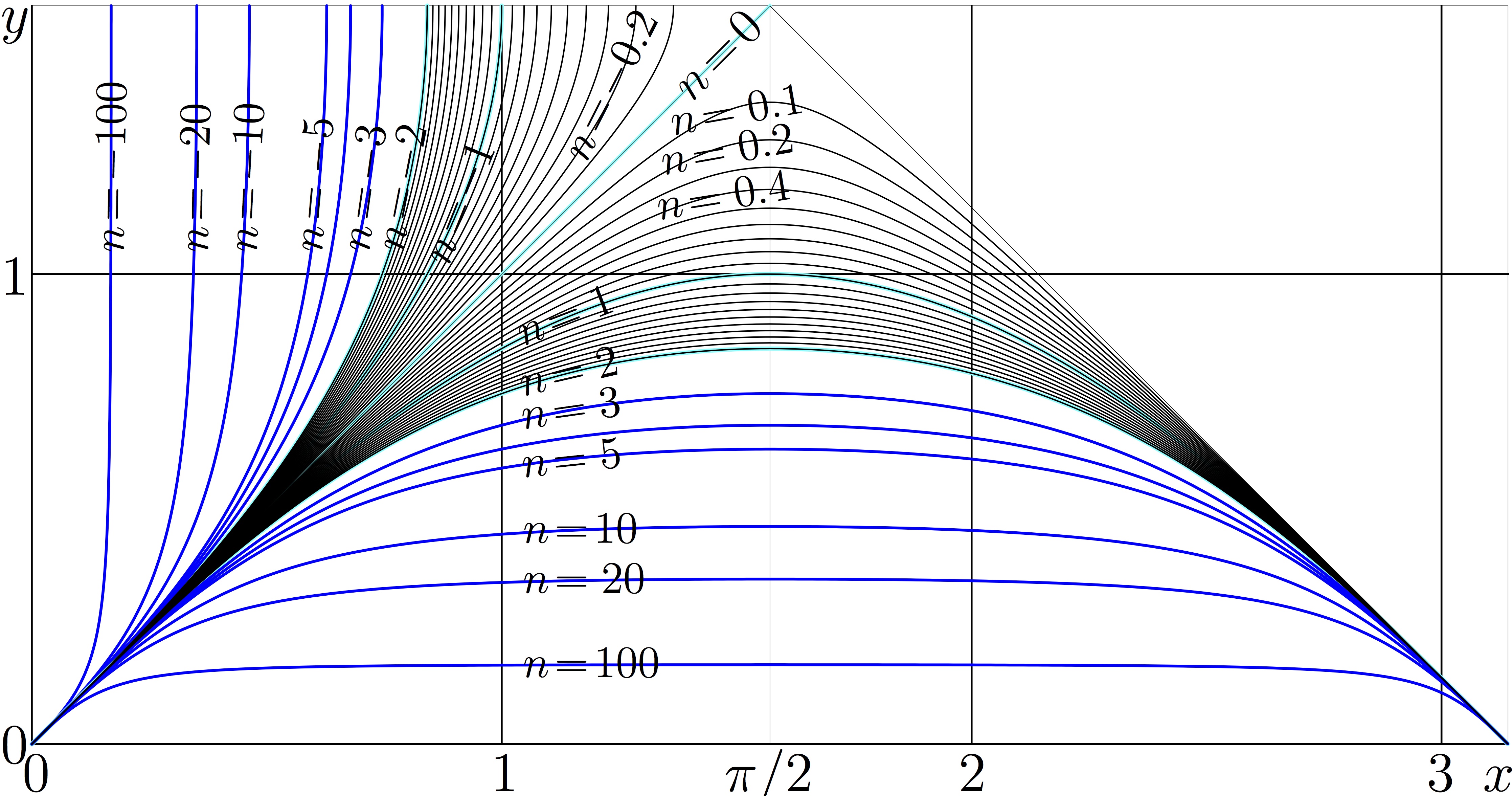 | 4,469 × 2,352 (1.62 MB) | Maintenance script (talk | contribs) | Importing image file |
You cannot overwrite this file.
